Wednesday, August 25, 2010

On The Rate of Wrongful Conviction: Chapter 9.5

As I have mentioned 11 times previously, I am preparing a monograph on the rate of wrongful conviction. Each chapter will deal with one estimate of that rate, beginning with zero and ending beyond 10%. I am posting the draft chapters here, as I write them.  I have so far posted the following: 

Chapter 0.027: The Scalia Number
Chapter 0.5: The Huff Number
Chapter 0.8: The Prosecutor Number
Chapter 1.0: The Rosenbaum Number
Chapter 1.3: The Police Number
Chapter 1.4: The Poveda Number
Chapter 1.9: The Judge Number
Chapter 2.3: The Gross Number
Chapter 3.3: The Risinger Number
Chapter 5.4: The Defense Number
Chapter 8.4: A Skeptical Juror Number

This post presents my estimate for the wrongful conviction rate associated with  those who have plea-bargained their way behind bars. Because plea bargains account for 94% of all convictions, and because no other estimate attempts to quantify the wrongful rate of plea bargains, this chapter is important to anyone attempting to understand our overall wrongful conviction rate.


Chapter 9.5
The Inmate Number

There is one segment of our society that, as a group, actually knows our country’s rate of wrongful convictions. That segment consists of the 2.5 million people we have behind bars. We may find them to be the most disreputable segment of our society, but perhaps we might learn something if we bothered to ask them.

In 1978 and ’79, the RAND Corporation bothered to ask. They surveyed 2190 jail and prison inmates from California, Michigan, and Texas. Participation was voluntary and conducted independently of jail and prison officials. Each participating inmate filled out an extensive questionnaire requiring approximately 50 minutes to complete. They were paid $5 for their participation. They answered questions regarding their demographics, current conviction, and criminal history. Though the surveys were intended to collect data on career criminals for policy review and recommendations, two questions from the questionnaire are useful for those attempting to calculate wrongful conviction rates.
"What charge(s) were you convicted of that you are serving time for now? (Check all that apply)"

“For these convictions, what crimes, if any, do you think you really did? (Check all that apply)."
Each question was followed by a list of 15 offenses and an “Other” option. Significantly, the last question included a “Did no crime” option. Those who truthfully selected that option claim to have been wrongfully convicted.

Tony Poveda, whom you may remember from “Chapter 1.4: The Poveda Number”, summarized the results for the prisoners surveyed, but not for the jail inmates. I present his tabular summary below.


The numbers are revealing in several regards. First, they immediately contradict the myth that, based on claims of inmates, there are no guilty people in prison. Most inmates readily acknowledge their guilt. Almost 95% of those convicted of drug possession concede they were properly convicted.

The second revelation is that the inmate claims of innocence are heavily dependent on the nature of the crimes. While 90% of those convicted of burglary concede their guilt, only 62% of those accused of rape do so.

The third revelation is that the inmate number for wrongful conviction far exceeds those guessed at by police, prosecutors, judges, and defense attorneys. The inmate number substantially exceeds those numbers calculated by those who divide exonerations by convictions. For the astute among you, however, for those of you who pay attention to chapter numbering, the inmate number is lower than four estimates to follow.

The salient question is whether the inmates responded truthfully and accurately. Most people will automatically assume the inmates were not truthful. While society accepted without question their guilty pleas, since 94% of them were convicted based on plea bargains, society is loath to believe their claims of innocence. The societal assumptions, however, are based on nothing more than bias and an unquestioned sense of omniscience. No evidence or analysis is brought forth to explain or defend the different standards for accepting claims of guilt and innocence.

Those who conducted the inmate survey, however, applied precautions common to professional pollsters. Whether conducting presidential tracking polls, taking a census of the entire U.S. population, evaluating customer opinion of a new razor, or asking inmates if they are in fact guilty, professional pollsters use multiple techniques to determine whether or not they are being given reliable data.

One technique for detecting untruthful and inaccurate answers is asking for essentially the same information in different fashions at different points in the questionnaire. Another is to re-interview the same group of people at a later date, to see if they are persistent in their responses. The RAND folks applied both techniques during their inmate survey. They also cross-checked the inmate responses, where possible, against prison records.

After assessing the accuracy of the inmates’ response, the researchers concluded that “83 percent of respondents tracked the questionnaire with a high degree of accuracy and completeness, and were very consistent in their answers.” Also, though the researchers expected the inmates to suppress unfavorable information, they discovered just the opposite: “We found evidence that respondents usually reveal more arrests and convictions in questionnaires or interviews than can be found in official records.”

One explanation for the inmate accuracy, at least as assessed by the researchers, is that the inmates are being truthful for pragmatic rather than lofty reasons. Most inmates are eligible for parole, and I presume most inmates prefer to be released early rather than serve their full term. Maintaining innocence is a pretty good way to insure that you won’t be paroled.

Parole boards consider complete acceptance of responsibility to be a critical issue in rehabilitation. In their belief regarding the power and necessity of confession, parole boards think in the same fashion as many religions, as Alcoholics Anonymous, and as many psychologists. Those who deny their guilt are unrepentant, uncured, and likely to repeat their crimes.

Tom Hutchinson, spokesman for the U.S. Parole Commission, explains that an expression of remorse is a requirement for parole. "It gets dicey when a person expresses innocence -- you can't accept responsibility for it when it's something you say you never did."

Calvin Johnson was convicted of rape by the people of Georgia. In his book Exit To Freedom, he writes:
I am innocent. I have filed appeals at every level, and as always I am denied. The parole board sends smiling representatives who give me hope, but during my hearings they ask me over and over again, "What can you tell us about the crime?" Each time I go up, I am denied parole, and rather than shortening the period between hearings, they lengthen it. Everyone urges me to join the Sex Offenders Program, but membership requires a detailed admission of my crimes.
After 16 years in prison, Calvin Johnson became the first man in Georgia freed by DNA evidence.

Arthur Whitfield, convicted of rape by the people of Virginia, was denied parole 14 times during his 23-year incarceration. He was eventually freed after DNA testing conclusively excluded him as the rapist.

Kevin Green, convicted by the people of California for the murder of his unborn child, was denied parole 4 times, in part because he would not admit his guilt. He was eventually freed after DNA proved another man beat Kevin’s wife so severely that she prematurely delivered a nearly-full-term, stillborn child.

Thomas Doswell, convicted of rape by the people of Pennsylvania, was denied parole 4 times over 18 years, in part because he would not admit his guilt. He was eventually freed after DNA testing conclusively excluded him as the rapist. Doswell, incidentally, was picked from a photo lineup by two witnesses after the Pittsburgh police added the letter “R” for “rapist” to the bottom of his photo.

Inmates absolutely understand the risk of maintaining their innocence. Though the results were officially confidential, each questionnaire included an identifier to allow RAND to conduct follow-up surveys by matching the inmate to the identifier. I doubt many inmates who declared themselves innocent on the survey shared that claim with the parole board. I wonder if some inmates refused to declare themselves innocent for fear that the parole board would learn of the specific results.

Not only did the confidential nature of the survey remove the penalty for declaring innocence, it also removed any substantive benefit for doing so. If the confidentiality were maintained, no penalty or benefit would accrue from denying guilt. The confidential nature of the survey seems to be a necessary, if not a sufficient condition for truthful results.

Further evidence that inmates’ self-reports are accurate will be presented in several of the remaining four chapters. For now, we need to look more closely at the results.
<<>>

I re-categorized the inmate data slightly, to allow comparison with later estimates, and I weighted the results by total state-court convictions for year 2000. I present the results below.


The number at the lower right, 9.5%, is the wrongful conviction rate based on prisoner self-reported claims of actual innocence. Assuming the inmate self-reports to be accurate, that number properly accounts for the range of crimes shown. It also accounts for the type of conviction, whether it be by jury trial, bench trial, or plea bargain.

Assuming results from California, Texas, and Michigan can be extrapolated to other states, the 9.5% number is the most comprehensive, all-inclusive number discussed to so far. If it is correct, one need only multiply it by the total number of people incarcerated to obtain an accurate accounting of all people wrongfully behind bars in our country.

No other number discussed so far, and no other number remaining to be discussed, provides a quantitative assessment of the wrongful conviction rate for those who plea-bargained their way behind bars. Since 94% of those behind bars are there as a result of a plea bargain, as shown in the table above, any number not accounting for wrongful guilty pleas cannot properly be applied to our entire prison and jail population.

Assuming that 9.5% number is applicable to the 2.5 million people we now have incarcerated, it means we are now holding 237,500 of our fellow Americans behind bars, despite their innocence.


ERRATA:
The title of the post and the draft chapter number has been adjusted to reflect my most current calculation of a 9.5% wrongful conviction rate based on inmate self-reporting.

Tuesday, August 24, 2010

Eating Dogs and Bargaining Pleas

In the movie Hombre, Paul Newman played John Russell, a man raised by Apaches. Because of his blue eyes and fair skin, his fellow stagecoach travelers were unaware and naturally insensitive to his Apache upbringing. They talked of Apaches, and of Apaches eating dogs. Audra Favor, the prim and proper wife of an unscrupulous Indian agent, made her disdain known through grimace and words.
Audra Favor: I can't imagine eating a dog and not thinking anything of it.
John Russell: You even been hungry, lady? Not just ready for supper. Hungry enough so that your belly swells?
Audra Favor: I wouldn't care how hungry I got. I know I wouldn't eat one of those camp dogs.
John Russell: You'd eat it. You'd fight for the bones, too.
For those of you convinced you would never plead guilty to a crime you didn’t commit, I suggest you reconsider. Not only might you plead guilty, you might figuratively fight for the bones.

Assume for the remainder of this post that you are under arrest for armed robbery of a bank. Assume also, if you wish, that you are innocent. That last assumption will have virtually no impact on the outcome, other than to increase your sense of injustice and increase the time you may spend in prison. But assume you are innocent.

Assume also I’m your court appointed attorney. I’ll help you through this best I can. I concede I don’t know too much about your case, and that we haven’t talked except that one time just before your arraignment, but I hope you’ll cut me some slack; I have 149 other cases also demanding my attention.

I realize you’ve been in jail for a few weeks now, five to be accurate, and you want out. I’m trying to make that happen. I submitted a motion to have your bail reduced, but it was denied. It’s still at $200,000. If you can’t somehow come up with the $24,000 non-refundable fee to the bail bondsman, you’ll simply have to wait it out here. Sorry.

If you insist on going to trial, and that is certainly your right, the trial might not occur for a while. Yes, you have a right to a speedy trial, but the courts have been rather generous in their interpretation of the Sixth Amendment. The definition of a speedy trial varies from state-to-state, but here the trial must begin within 180 days of the arraignment. So I guess we’re looking at four or five months, unless we agree to a postponement, and there are reasons we might want to do that. Did I mention that I have another 149 cases demanding my attention?

So what’s going to happen now is the DA is going to come in and talk to you about the possibility of avoiding the trial completely by pleading guilty. We’ll try to get the best deal she has to offer, then you can decide whether or not you want to plead guilty for a substantial reduction in sentence.  I’ll be right here, sitting close by, and I’ll quietly explain to you what’s going on. We won’t be recorded, and she won’t be able to hear us speak to one another if we keep our voices down. So let’s get this show on the road.

DA: You’ve been charged with violation of USC 2113(a). Given that you have no criminal record, that carries a base sentence of 33 to 41 months. Since you used a gun, even though no shots were fired and no one was hurt, that bumps the range up to 78 to 97 months. Those numbers are based on the federal sentencing guidelines, and there’s not much I can do about them. I'm going to be honest with you. If we go to trial, I’ll be asking for the maximum, but it will be up the judge to make the final decision on that. I assure you, though, they tend to sentence near the upper limit. So let’s just say you’re looking at 97 months if you go to trial. That’s eight years.

You: But I didn’t do anything.

DA: The evidence says otherwise.

You: What evidence?

DA: That’s not what I’m here to discuss.

Me: If we go to trial, they’ll have to provide us all the evidence they have beforehand. We call that discovery. But they have no legal obligation to provide any discovery material before discussing a plea bargain. I know it doesn’t sound fair, but that’s the way the system works. Even if she tells you about evidence they may have, she doesn’t have to be truthful. The courts have ruled that she can lie about the evidence she has in order to secure a confession. That’s what’s going on here. They want you to confess to robbing the bank, and if you do so, they’ll give you a break.

You: But I didn’t rob the bank. I keep telling you that.

Me: It doesn’t matter what I think. What matters is whether we can convince a jury. Conviction rates for robbery cases are around 75%. Keep in mind that you have no alibi, so I wouldn’t put too much stock in the jury voting to acquit.

You: But I’m innocent!

DA: Here’s what I’m offering. If you plead guilty to robbery, we’ll forget that it was a bank and ask the judge to give you the minimum. That will cut the sentence down to 63 months. That’s almost three years off. With time off for good behaviour, you could be out in half that, say 32 months.

You: I don’t care. I want a trial. I want a jury to hear my side of the story. I’ll never confess to a crime I didn’t commit. Never!

DA: Counselor, have you explained the facts of life to your client?

Me: There are several problems with proclaiming your innocence. First if you take the stand to proclaim your innocence to the jury, the DA can use your criminal past to impeach your testimony. You don’t have a record so that is no concern here, though it is for most my clients.

You: I’m not like all your other clients. I’m innocent.

Me. Yes, yes. I understand. Consider this: if you testify and are found guilty, the judge can increase your sentence on the assumption that you perjured yourself based solely on the jury’s guilty verdict. None of them believed you, so you must have been lying. Like it or not, that’s not only allowed, it’s called for explicitly in the sentencing guidelines. It’s considered an obstruction of justice enhancement to the sentence, and they frequently apply it. In this case, that would add 24 months to the maximum she was talking about. That would mean you’re looking at 121 months, more than ten years. If we go to trial, and that is completely up to you, I will advise that you not testify for several reasons, not the least of which is the sentencing enhancement.

You: But that’s not fair. I have a constitutional right to testify.

Me: Yes you do, but she has a congressional act that tells her the judge can add to the sentence just as I described, and she’s experienced enough to know it happens frequently. This has nothing to do with fairness or innocence, or truth or fact. This is our justice system. You are bargaining from a weak position. The only thing you have to trade are your constitutional protections, such as they are.

You: That’s not right. I’m innocent. I didn’t do it. I’m not going to confess to a crime I didn’t commit, ever.

Me: That brings up the third point you need to know. If you are found guilty and you refuse to convincingly acknowledge your guilt while in prison, it is extremely unlikely you will be paroled. They will deem you to be unrepentant and not rehabilitated. You will serve the full time.

You: But that’s not fair!

DA: Let me see if I can make your decision easier. If you elect to go to trial, and that is of course your constitutional right, I feel I’ll have no choice other than to show that you, not your accomplice, who by the way is being much more cooperative, that you played an aggravating role in the robbery, that you were the primary planner and leader. I’ll also prove to the jury that your actions had the effect of physically restraining the bank employees and clientele. Assuming I’m successful, and in this case I’m confident I will be, especially after my discussions with your accomplice, those two enhancements will add 24 and 30 months, respectively. That will bring your total to 151 months, assuming no enhancement for perjuring yourself on the stand. That’s twelve and a half years, assuming no perjury enhancement. And unless you’re later willing to admit your guilt, you’ll probably serve the full sentence. I’m sure counsel has explained that to you.

You: But I’m innocent!

DA: Did I mention your accomplice is willing to testify against you if I set him free right now? That doesn’t seem like the kind of thing a friend would do, but you know people. Don’t worry, though. I’m not going to let him out without serving some time, a few months at least.

You: Can she do that? Can she let someone off for testifying against someone else? Isn’t that like bribery? Wouldn’t it be like her paying him for his testimony?

Me: The courts don’t see it that way. As long as she has some evidence to corroborate his testimony, and it doesn’t take much, then she can trade sentencing for testimony as she wishes.

You: But that’s not right!

DA: Now, on the other hand, if you’ll plead guilty here, right now, before I leave this room, I’ll be willing to reduce the charge to simple robbery. We’ll forget the fact that it was a bank, that you used a gun, that you were the leader, and that you restrained people during the commission of a felony. I’ll also ask the judge to give you the minimum. That means you’re looking at 33 months, you’ll be out in 16 months. Take it or leave it. I don’t care one way or the other.

Me: Trust me, she cares. She wants a conviction and she wants it easy. She has only so much time in a year, and any one trial can consume a substantial portion of that time. She wants a conviction so badly, she’ll plead out 95% of her cases this year, just as she did last year, and just as she will next year. It’s one of the few advantages you have, knowing how badly she wants you to plead. Hang out a little longer, she’ll sweeten the pot a little more.

You: But I’m innocent!

DA: And if you plead guilty, the sentencing guidelines call for another 6 month reduction. That’s almost automatic. I can also make a motion to the judge that you be granted an additional further reduction for assisting this investigation by notifying us on a timely basis that you intend to plead guilty. And I’ll do that for you. I’ll make that motion, but only if you decide in a timely fashion, like now, like before I leave. That will reduce the sentence to 24 months. You’ll be out in 12 months, one year instead of twelve and a half. It’s the best I can do.

You: I don’t know what to do.

Me: Take the deal.

You: But that’s a year for a crime I didn’t commit. If I go to trial, they might free me. You think they will believe me?

Me: Odds are if you go to trial, you’ll go to prison. Seventy-five percent chance. I’ll try my best, but I can’t promise anything. Did I mention I have 149 other cases?

You: I don’t know what to do.

DA: This might not be a good time, but I should let your counsel know I plan to ask for a six-month continuance. He thinks he has a heavy workload, but he should see my desk. I’m sure the judge will understand that there’s only so much we can do with the staff they give us, and I know the judge’s docket is pretty packed anyway, so we’ll just have to see how that goes. The point is, I guess, that if you plead guilty, you could be walking free before your trial would otherwise start.

You: I don’t know what to do.

DA: Did I mention that if you go to trial and are convicted, you also face a $75,000 fine?

Thursday, August 19, 2010

Cory Maye Now In Print

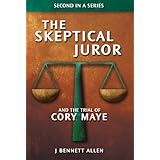
The Skeptical Juror and The Trial of Cory Maye is now available from Amazon in print format as well as Kindle format.

I am unabashedly proud of this book. It presents as an alternate scenario the possibility that the police conspired to convict a factually innocent man of capital murder via false testimony.

As the story is woven between a fictional jury deliberation of the case and the actual trial testimony, the book provides readers the opportunity to see if they can detect the tell-tale fudges, obfuscations, and outright falsehoods in the testimony before the testimony is deliberated by the fictional jury.

After all the actual trial testimony is deliberated by the fictional jury, read on to see how The Skeptical Juror pieced together the events that led up to the tragic shooting of Officer Ronald Jones and wrongful death sentence imposed on Cory Maye.

If you should purchase and read this book, we would appreciate your honest comments on Amazon.

Wednesday, August 18, 2010

The War on Ephemera and Cardboard Furnishings

I think Byron Case is wrongfully convicted. The State of Missouri believes otherwise. They believe his case is resolved. I believe otherwise. In the near term at least, probably even the medium term, they will prevail. Beyond that, we'll just have to see.

In the meantime, Byron occasionally breaks free of his mental confinement by writing. He has his own blog, The Pariah's Syntax, subtitled Unbound Notes From An Innocent Man. His posts are understandably infrequent, given that he has no access to a computer. He must relay his work through parties on the other side of the proudly lethal electric fence that surrounds the Crossroads Correctional Institute.

If you wish to get a sense of life in prison from someone lucid and inside, you could do worse than visit his site every now and then. It's not about overt brutalization. It's more about a mundane loss of freedom, one in which prisoner control is more important than cruelty or kindness.

On ocassion, I will reproduce one of Byron's posts here as a reminder to myself of work to be done. Now is a particularly good time for me to do so, to rely on Byron's writing, since I am remiss in my own. (It seems my plan to calculate wrongful conviction rates based on judge-jury agreement data has become consuming.) To buy myself some time, I now present another behind-the-bars essay penciled by Byron Case.This one is titled ... 

On one side you find the prison guards. Their job is to ensure the safety and security of the institution by enforcing policy. On the opposite side are the inmates, whose efforts at living in relative comfort while serving their sentences are frequently at odds with those policies. The struggle is endless; the battles are a never-ending back-and-forth.

The guards perform routine random cell searches, with every inmate here at Crossroads guaranteed a minimum of two chances to have their footlockers and loose property rifled through — once by the day shift, once by the evening. Depending on the guards' moods, the search experience can be measured on a scale that runs from relief, as when it's brief and nothing's left horribly out of place, and a nightmare, as when the guards leave the place looking like they turned it upside-down and shook it. Certain guards are notorious for preferring the invert-and-agitate method. They are not exactly liked.

It's the "nuisance contraband" that is most often found and confiscated in these random searches: empty cracker boxes, excess newspapers, improvised ashtrays. Last week, a huge poster of a basketball player was pulled down from a neighbor's wall; the week before, someone was forced to part with an empty 5-gallon sealing compound bucket. From some cells come more impressive items, often handmade.

One man in my wing is a craft-master. He makes hardcover address books, rocking-chair picture frames, and dreamcatchers, among other things. The dreamcatchers are his most popular creation, which he makes from the thread of clothing scraps and what I suspect are melted plastic coathangers. His methods are proprietary. The results look like something you'd be able to buy from a catalog. Naturally, the guards know what he's up to and visit him frequently, big plastic trash bag in hand. No matter how many times they take his supplies and half-finished projects, he does not abandon his hobby. It's hard not to admire that dedication a little.

Across from me there used to reside a waifish slip of a man who welcomed the occasional, ahem, gentlemen caller into his cell. "Melissa," he called himself. Asked to step out for a search of his cell one afternoon, he waited patiently while two guards picked through his things. No more than a few minutes later, one of the two came out with a wad of something fuschia in his gloved hand, which he tossed into the trash bag. Melissa lost it. Whatever they'd taken was obviously a prized possession, something he cared enough about to face off with the guards over. "Nuh-uh," he shouted again and again. "That's mine." Heads turned; the commotion was impossible to ignore. He stood arguing with them for over twenty minutes, apparently never able to finagle the return of the confiscated item. It was several hours later when I overheard what the fuss had been about: the guards had taken his last pair of thong underwear.

Being no angel, I've certainly had my share of things confiscated; though, nothing so precious as a handcrafted object nor salacious as a pair of exotic smallclothes. For awhile, cardboard, wood glue, and paint were easily gotten, and I availed myself of that fact. With enough of these three components I could build small shelving units and miniature cabinets — some with cutout designs in the doors — that looked like they might've been part of the actual design of the place, to the untrained eye. Space being at a premium here, a cubby in which to store cassette tapes or toiletries came in handy. Best of all, the guards didn't seem to care these constructs were contraband made out of illicitly obtained supplies; they left them alone. Some were able to keep their shelves for a couple of years. Then, all at once, they disappeared, a sudden adherence to the letter of policy enacted. The sources for the supplies vanished at around the same time. No one I know has dared dabble in cardboard carpentry since.

A few other things I've lost in searches, some of which I was sorry to lose:
  • One three-dimensional paper Mini Cooper (yellow)
  • One decorative wax paper votive shade (German street carnival scene)
  • Seven wire twist-ties (black)
  • Two highlighter markers (one yellow, one blue)
  • Two packages ramen soup (beef flavor) that were later returned with an apology
  • Five decorative pencils cups (made from oatmeal canisters)
  • My expectations of personal privacy

Monday, August 16, 2010

Update on The Despicable Claude Jones

You may recall my post about The Despicable Claude Jones. He was certainly despicable, and he was absolutely executed, but he may have been innocent of the crime for which he was mainlined.

Despicable Jones was charged with killing a convenience store employee during a robbery. He was convicted based on the testimony of Timothy Jordan, Danny Dixon, and a 1" hair segment.

Timothy Jordan turned out to be the owner of the murder weapon. He also sold his testimony to Texas for time off. He later recanted his testimony. "I took a deal because I was scared, and I testified as to what they told me to say." Well that and the time off.

Danny Dixon is the only one of the three who admitted to being there. He was the one who threw the murder weapon in the Trinity River and helped the police find it there. He didn't get time off so much as more time to breathe. Instead of being needled for capital murder, he was sentenced to 60 years.

That leaves the 1" hair segment. Police found it on the scene. At first, the 1"-hair-segment experts said it was too small to test, but later decided it was just fine. They swore under oath that the 1" hair segment matched Mr. Despicable but neither of the other two sweethearts who were pointing the finger at Jones.

We'll see.

It turns out Texas made the mistake of not destroying the evidence immediately. That 1" hair segment has surfaced and a judge has declared that Texas must allow it to be tested for DNA matching with Jones, Dixon, Jordan, and gosh knows who else. If that 1" hair segment doesn't belong to Despicable, then it's clear he was wrongfully convicted on the basis of alleged accomplice testimony only. (That's not allowed in Texas. That's why they usually buy testimony from two or more snitches, or change their mind about the viability of a 1" hair sample as evidence.)

A failure to DNA match the 1" hair segment to Despicable Jones also leaves open the distinct possibility of  him being factually innocent of this specific crime for which he was plunged. It's possible he was never there, just as he claimed.

Texas, of course, tried to stop the hair from being tested. They did so to save money, or put the case to rest, or for the kids, or to end world hunger, or because it's just what they do and they can't help themselves anymore.

Now we just get to wait for the test results to see if Texas juiced Claude Jones for the wrong crime. I make my prediction right here and now: no DNA match.

If Texas thought the 1" hair sample matched Jones before trial, they would never have hesitated to use it against him. They had to look long and hard at that sample, under just the right light, with their tongue twisted 30 degrees clockwise, before they said "Yeah, I see it, kinda for sure. It's a match."

So that there is not confusion, I repeat my prediction.  No DNA match.