Thursday, July 7, 2011

Today I'm Ten Years Gone

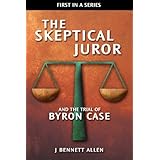
The title of this post comes from a blog post by Byron Case. You may recognize Byron's name from the title of my first book.

I had never met or spoken with Byron when I began writing of his case. I choose to write about his trial because the case documents were available online from sites maintained by both his supporters and his detractors. I started writing with no opinion as to his guilt or innocence. I wanted the case to unfold before me as if I were a juror at his trial.

It was a naive thought.

While working on the book, I realized that a recorded phone call, instrumental to his conviction, had been seriously  mis-transcribed. The errors were always to the disadvantage of Byron. Always. I approached The Skeptical Spouse and explained my concern. She agreed that I had a moral obligation to contact his appellate attorney and reveal what I had discovered.

My impartiality had come to an abrupt end.

Byron's relationship with his attorney soon thereafter came to an end as his appeal was completed and submitted. I was too late, and I knew too little then to have any impact on that appeal. It was soon denied.

My relationship with Byron, on the other hand, was just beginning. We speak every other Sunday for 90 minutes, at prison long-distance rates. Each time, we talk about the next step in trying to free him from his wrongful conviction. We both know the odds are long, that years will pass before there is any chance at all.

Bryon has his own blog. He types his posts on his SX typewriter, which he says stands for "Sucks." He mails them to someone outside the walls, and that person sees they appear in his blog, The Pariah's Syntax.

In his bio, there on his blog, Byron describes himself as a writer, wrongfully imprisoned. The description is apt. He is indeed wrongfully imprisoned. He certainly can write. In fact, it's no longer a polite secret that The Skeptical Spouse prefers his writing to mine.

Last month, on the 11th day of June in 2011, Byron wrote of his ten year anniversary behind bars. It wasn't one of his cheerier posts. Allow me to quote just a bit of it.
Today I'm ten years gone. ... Three thousand six hundred and fifty-two days spent in the shadow of oppression, denied rudimentary comforts, and tortured by the threat that it will go on and on and on, to the end of me.

Not one of these days has passed without my thinking, This has to end. Something must make it right. I am obsessed with the idea that truth and justice will eventually be done, never mind the universe full of evidence to the contrary. ...

Everyone has a limit on what they can bear. The trick is rebounding from collapse with a sense of purpose. I like to think I keep purpose foremost on my mind. Every day I wake up dreaming of the end. Every day I wonder how I might bring it about. Every day I focus on freedom. Every day I imagine a future in which every damned day doesn't begin and end locked inside a concrete box. I'm not even angry anymore at my ex, Kelly, the pathetic character whose lies put me here -- Æsop taught us we can't begrudge the scorpion for stinging -- I just want back what was stolen. I just want the bad dream to be over. I just want to live.
I will speak with Byron again in 10 days. We will talk about our next step to reverse this wrong.

Wednesday, July 6, 2011

Cory Maye, In Light of New Evidence

Radley Balko has another nice article at The Huffington Post about Cory Maye's impending walk to freedom. In this one, Radley takes us inside the courtroom as the judge is finalizing the agreement between the prosecution and defense. This passage really caught my attention.
[Judge] Harrell then lays out the plea, and asks several times in several different ways if Maye understands and accepts the terms of the agreement. "Yes, sir," Maye says.
Harrell then turns to the prosecution to ask if they're still amenable to the plea. [District Attorney Hal] Kittrell then reads a statement that for Maye, his attorneys and his supporters is one of the more satisfying moments of the last 10 years. Kittrell says that the state's decision to agree to a lesser charge came not only in response to the decision from the Mississippi Supreme Court, but in light of "new evidence" that had come out in recent years.
DA Kittrell could have performed his task without adding the part about the new evidence that had come out in recent years. By adding it, he conceded that the State of Mississippi had, at a minimum, overcharged Cory Maye with capital murder. I give him credit for being an upright guy. As a society, we must be willing to admit when we have wrongfully convicted someone, and we must fight to free them. We should not fight blindly to keep the wrongfully convicted imprisoned, nor to see them executed.

DA Kittrell did not elaborate on exactly what new evidence had convinced them to free Cory Maye. His silence on the matter is both frustrating and tantalizing. It allows me to imagine that some of the original observations and insights I presented in my book played at least a small role in Cory's release. In no means do I want to detract from the real heroes in this saga. Radley Balko, Bob Evans, Abe Fortas, Ben Vernia, and numerous others working long pro bono hours deserve the real credit.

Though I sent unsolicited copies of my book to some of them, I have never spoken with any of them, or any of the family for that matter. I wrote my Cory Maye book as an outsider to the case, as I did my Willingham book. I relied extensively on information that others had uncovered, collected, and made public. Nonetheless, I believe I may have uncovered new, additional evidence of Cory Maye's innocence, as I did in Willingham's case.

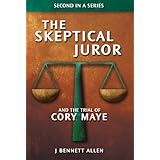
From The Skeptical Juror and the Trial of Cory Maye, I offer the lead-in comment to the Notes section of my book.
Originality of This Work
Despite a heavy reliance on those who have worked on this case before me, this book is an original work completed independently of those just acknowledged. No one has yet presented the trial testimony in a format palatable to general readership. No one has deliberated the testimony by means of a fictional jury. No one has provided a comprehensive, alternate scenario for the events as portrayed by the State of Mississippi. Specifically, I am unaware that anyone else has publicly put forth the following possibilities:
That the raid may have been orchestrated primarily by Darryl Graves.
That Ron Jones met with Darryl Graves earlier in the day to discuss and plan the raid.
That Ron Jones and Darryl Graves may have together surveilled the duplex on Mary Street, and that the surveillance may have consisted of nothing more than a simple drive by.
That Darryl Graves may have remained behind at the Prentiss police department while Ron Jones led the raid, and that this behavior caused him to be unable to hear the three gunshots from within the Cory Maye apartment.
That Darrell Cooley may have never kicked or shouldered the front door to Cory Maye’s apartment.
That Ron Jones and Darryl Graves may have planned to enter through the rear door due to difficulties associated entering through the front door.
That Ron Jones may not have been wearing his bulletproof vest.
That Darrell Cooley’s testimony about removing Ron Jones’ vest may be contradicted by Ron Jones’ autopsy report.
That the clothing proffered by the State of Mississippi may improperly represent that worn by Ron Jones on the night of the shooting. More specifically that Ron Jones may not have been wearing a vest, and that had he been wearing a groin pad as shown in the proffer, he may not have suffered serious injury.
That Ron Jones may have entered the rear door of Cory Maye’s unit due to his unfamiliarity with the duplex and issues of left/right confusion.
That the confusion between Terrence Cooley and Phillip Allday at the back of the duplex may have stemmed from the realization that Ron Jones was about the enter the wrong apartment.
That Ron Jones may have used a battering ram to breach the rear door, and this use explains his failure to have his weapon drawn.
That the abrasions on Ron Jones’ fingers may have resulted from his use of the battering ram.
That the 35 degree left-to-right, front-to-rear track of the bullet within Ron Jones body may have resulted from the stance he assumed while using the battering ram.
That the fatal bullet may have traveled nearly parallel to the floor, or only slightly upward, and that it may have struck Ron Jones in the abdomen because he had not completely climbed the steps.
That Buddy McDowell may have had Dr. Hayne mark the entry wound on the finger-abrasion diagram to keep the entry-wound diagram from the jurors, and that he may have done so to keep the jurors from learning that the bullet could have changed its direction prior to entering Ron Jones’ body.
In the end, however, wrongful conviction work is not about those who fight to free the wrongfully convicted. It is about those people who we (as a society) have wrongfully put behind bars. As advocates, we frequently work from easy chairs, while sipping a cool beverage and yelling at the cat. If frustrated, we can go out and walk. When tired, we can sleep in a comfortable bed with someone we love. When nature calls we can relieve ourselves in private.

The quarter million Americans who are today wrongfully behind bars have no such simple freedoms.

A couple years ago, I worked successfully to keep our society (us) from adding one more to the quarter million. Now, every day, I work to free two whom we have already put inside. Every day I work to free Byron Case and Michael Ledford.

Maybe someday I will write something that will free one of them.

Saturday, July 2, 2011

The Impending Walk To Freedom of Cory Maye

Sometimes I'm right, sometimes not so much. Regarding Cory Maye, my prediction was spot on.

I wrote of Cory Maye last year in The Skeptical Juror and The Trial of Cory Maye. I offer first the Prelude to that book, in its entirety:
I got stopped one night. They said I had crack. I didn’t have anything. They hit me. Said they were taking me to jail. Mister Ron Jones showed up later. Asked me if I was okay, and told them not to take me in. He was a good guy. He was a good cop.” -- Resident of Prentiss, Mississippi
As are many rural areas in the country, the small town of Prentiss is suffering a surge in drug-related crime. According to Henry McCullum, Sheriff of Jefferson Davis County, drugs are now the major industry in an otherwise depressed economy. The steady supply of crack, marijuana, and meth enriches the few at the top, sustains those in the middle, and consumes those at the bottom. The illegal drug trade is our nation’s deadliest pyramid scheme.
Perhaps fifty percent of the male population in Jefferson Davis County will spend time in prison before reaching their twenty-first birthday, mostly for drug-related crimes. The homicide rate will exceed that of Detroit.
Unfortunately, the drug economy is but one constituent of the pall that hangs over the small town of Prentiss, and over the county named for the president of the Confederate States of America. The population of Prentiss is primarily white, as is the town’s five-man Police Department. The population of Jefferson Davis County is primarily black, as is the county’s five-man sheriff’s department. The issue of race is omnipresent.
Ron Jones has, for the last four years, worked to solve both the drug and race problems. He has earned the respect of those he serves and protects, regardless of skin color. Among the black community he is known as one of the good ones, perhaps the only good one. Among the drug community, he is known as the K-9 officer, the one with the drug-sniffing dog.
Now, in the waning hours of this first day after Christmas, Ron Jones is prepared to lead his motley team of officers into a darkened duplex to serve yet another search warrant for drugs. He is there based on the word of the town bigot that a large quantity of drugs is stashed inside.
As the rear door is breached, Ron is the first to enter. His announcement that he is a police officer, there to execute a search warrant, is interrupted by gunfire. Ron is struck in the abdomen, just below his vest.
“I’m hit,” he says, making his way back down the steps. The bullet has punctured his aorta. He will bleed to death within minutes.  He falls to his knees.
“Get me to the hospital, I’ve been hit.” He collapses to the ground.
“Good Lord, help.”
From the Postlude, I offered the following summary.
The night was cold and clear and calm. Conditions were ideal for sound transmission over a long distance. Had you been standing on the court house steps that night, when Cory Maye shot and killed Ron Jones, you might have been able to hear the gunshots from a mile distant. If you were inside the police station, you would have instead learned of the shooting over the police radio.

If you had rushed to the duplex, you could have arrived within minutes. Perhaps there, as you stood facing the yellow duplex on Mary Street, you would have seen Darrell Cooley and Stephen Jones struggling to lift the limp and seemingly lifeless body of Ron Jones into the back seat of a patrol car. Perhaps you would have seen Darryl Graves appear from somewhere to help them finish their desperate task. You might have then watched to patrol car race away, lights flashing, siren wailing, as if Ron's life depended on getting to the hospital quickly.

If you had walked to the back of the duplex and stood on the steps as Ron Jones had just minutes earlier, you might have heard an infant girl crying and screaming. At the instruction of the local law enforcement, she would remain unattended and uncomforted until her mother returned home from her night's work at the chicken processing plant.

Standing there, you might have also heard a scared and confused voice apologizing repeatedly, claiming he didn't know it was the police breaking through his door.

And had you laid there on the floor, in place of that scared and confused young man, you might have felt the boots of police officers who would vent their anger and their shame against a handcuffed citizen in their care.
The jury convicted Cory Maye of capital murder. The Court sentenced him to death. Now he will soon walk free. You could almost write today's headlines by quoting from the end of the book's Postlude.
Perhaps next year, a new trial for Cory Maye will take place in the Jefferson Davis County Courthouse on Columbia Avenue, right in the heart of Prentiss. If so, the local populace will divide again along racial lines, as they always have. The prosecution will attempt to exclude blacks from the jury and the defense will try to stop them from doing so. Everyone will behave outwardly, at least, as if race isn't an issue. In some regards, things will be as they have always been in Prentiss.

In the new trial, however, Cory Maye will be represented by a well-funded, well-prepared team of talented attorneys. The State of Mississippi, on the other hand, will attempt to hold together a bruised and battered prosecution theory that has been unraveling ever since Judge Eubanks passed sentence.
This time, Cory Maye's defense team will take the offense. The State of Mississippi will mount a vigorous fighting retreat. It's not clear either side will be able to secure a unanimous vote from the divided citizenry of Jefferson Davis County, Mississippi.

The two factions may instead elect to call a truce under terms that allow each side to claim victory. I predict the State of Mississippi will offer Cory Maye a sentence of time served in exchange for a guilty pleas to the crime of manslaughter. I predict Cory Maye will accept, and will walk free.

And I predict, sadly, that not much else will change in Prentiss, or Jefferson Davis County, or Mississippi.
I believe I may have, in my book, added some insight previously missed. I did provide unrequested copies to the legal firm representing Cory Maye. I am definitely not, however, responsible for Cory Maye's freedom. That credit falls to many other people, some of whom I mentioned in the Acknowledgements section of my book. I'll quote that here as well.
I learned of the case of Cory Maye from the writing of Radley Balko. Balko is an award-winning investigative journalist who writes of criminal justice and civil liberties issues. He is, as of this writing, a senior editor for Reason magazine. [He now writes for Huffington Post.] He writes routinely for Reason and his own blog, The Agitator. His work has been cited by the U.S. Supreme Court and excerpted by the Mississippi State Supreme Court. ... No one deserves more credit than Radley Balko for bringing the case of Cory Maye to public attention.

I acknowledge as well the law firm of Covington and Burling for their pro bono effort to secure an acquittal for Cory Maye. Within that firm, I note specifically  the work of Abe Pafford and Ben Vernia. Pafford learned of the Cory Maye case via the writing of Radley Balko and convinced his firm to assist in the case, despite his junior status. Ben Vernia argued the venue issue before the Mississippi Court of Appeals. The Court granted a new trial based on that issue and that issue alone. Vernia continues to represent Cory Maye even after forming the Vernia Law Firm, also of Washington D.C.

I acknowledge the work of the folks at Reason.com for their support of Radley Balko as he investigated the case of Cory Maye. I acknowlege them as well for their role in the development of the online documentary Mississippi Drug War Blues that so clearly presents the case of Cory Maye.
Also worthy of substantial credit is Bob Evans, Cory Maye's original appellate attorney. I mentioned him briefly but with unvarnished respect in the Postlude.
After the trial, Cory Maye's family fired Rhonda Cooper. Bob Evans, the original public defender in the case, took over as Maye's appellate counsel. The Prentiss Board of Alderman fired Evans for doing do. Bob Evans nonetheless continued to represent Cory Maye without hesitation or regret.
For a more conventional, after the fact discussion of Cory Maye's impending walk to freedom, see here, here, or here.

Tuesday, June 28, 2011

I Oppose the Impending Execution of Probable Scumbag Richard Bible

Richard Bible sits on death row awaiting execution by the people of Arizona. I believe Richard Bible is in fact guilty of the brutal killing of a young girl. I nonetheless oppose his execution.

Those of you who follow this blog know that I seldom oppose an execution. Normally I find no chance of actual innocence and stand mute. I do not publicly oppose a death penalty because the person to be executed was underage at the time of the killing, or had a terrible childhood, or was mentally retarded, or was a foreign national who did not have an opportunity to coordinate with their consulate. I'm not necessarily arguing that such points are inconsequential. Instead I'm explicitly using a specific standard to decide whether I will publicly oppose an execution or stand mute while we put one of our own to death.

If I believe there is a chance that the person might be factually innocent, I oppose; otherwise, I stand mute.

That being said, I believe Richard Bible is almost certainly guilty of the crime, yet I oppose his execution. I'll allow you to read two summaries of his case and give you an opportunity to discern the cause of my objection before I explain it at the end of this post.

The first summary is from one of his appeals, State of Arizona v. Bible.  The summary provides relevant facts, but provides them in reverse order of significance. Hang in there to get to the DNA evidence.
In April 1988, the Coconino County Sheriff seized a dark green and white GMC "Jimmy" (or "Blazer-type") vehicle in Sedona, Arizona. The GMC had been used to deliver newspapers. A deputy who drove it to Flagstaff noticed rubber bands in the GMC, as well as damage to the left rear quarter panel. Another officer noticed the damaged quarter panel and saw bags of rubber bands in the vehicle. The Sheriff stored the vehicle in a fenced impound lot near Flagstaff, close to Sheep Hill. On June 5, 1988, Defendant stole the GMC from the impound lot. A police officer saw the vehicle parked in Flagstaff later that day.

The next day, June 6, 1988, shortly after 10:30 a.m., the victim, a nine year-old girl, began bicycling from where her family was staying in Flagstaff to a ranch a mile away. The victim's family passed her while driving to the ranch. When the child did not arrive at the ranch, her family began to search and found her bicycle by the side of the road. Unable to locate the girl, the victim's mother called the police at 11:21 a.m.

The Flagstaff police arrived within minutes; they called in a helicopter, set up roadblocks, and alerted the Federal Bureau of Investigation ("FBI"). The victim's mother told the police that she saw two vehicles on her way to the ranch. One was a royal blue Blazer-type vehicle. While at the ranch, she saw this same vehicle going the opposite direction at a high rate of speed. She described the driver as a dark-haired, dark-complected Caucasian male, mid-to-late twenties, possibly wearing a white T-shirt. He had looked at her intently.

That same day, Defendant's brother was at his home near Sheep Hill. Defendant arrived there shortly before 1:00 p.m., driving a dark green or dark silver, white-top Blazer-type vehicle with a dented left bumper -- the vehicle Defendant had stolen. Defendant was wearing levi pants, a plaid shirt, a camouflage baseball-type cap, and boots. He told his brother that the Blazer belonged to a friend. After Defendant left, his brother --who thought that Defendant had been stealing from him -- called the police and described the vehicle.

Shortly thereafter, a detective realized that the victim's mother's description of the Blazer-type vehicle and its driver approximated Defendant and the GMC Jimmy. At about 5:00 p.m., the GMC was discovered missing from the impound lot. At 6:20 p.m., police officers saw Defendant driving the GMC -- although it had been painted a different color. The officers attempted to stop Defendant, and a high-speed chase began. When finally cornered, Defendant ran from the vehicle and hid.

Using a tracking dog, officers found Defendant hiding under a ledge, camouflaged with twigs, leaves, and branches. When arrested, Defendant was wearing a "levi-type" jacket, jeans, a plaid shirt, boots, but no underwear. Defendant also had wool gloves, and police found a baseball-type cap nearby. Police also found a large folding knife where Defendant was hiding and another knife in one of his pockets.

Within hours after his arrest, Defendant confessed to stealing the GMC the previous day and painting the vehicle two hours before his arrest, but denied being in the area of the abduction. Defendant had planned to drive the GMC to Phoenix, but a helicopter had him "pinned down." When Defendant was booked, the police confiscated his clothing. Defendant was incarcerated for the rest of the relevant time period.

In the GMC, police found a green blanket and numerous rubber bands but no rubber band bags. The steering column had been cut open and one piece of metal had fallen to the floorboard. The GMC contained a case of twenty 50-milliliter bottles of "Suntory" vodka with two bottles missing. In the console was a wrapped cigar broken in two places, a "Dutchmaster" cigar wrapper and band were in the ashtray, and Carnation "Rich" hot chocolate packets were in the vehicle. Investigators found blood smeared inside and under the GMC, although testing did not reveal whether the blood was human.

Following a large and unsuccessful police search, hikers accidentally found the victim's body near Sheep Hill nearly three weeks after her disappearance. Police secured the area and later videotaped the scene and processed evidence. The victim's naked body was hidden under a tree, mostly covered with branches, with her hands tied behind her back with a shoelace. Police found one of the victim's sneakers, without a shoelace, near the body. The victim's panties were in a tree nearby.

An unwrapped, unsmoked cigar with two distinctive breaks in the middle was on the ground near the body. The cigars near the body and in the GMC looked very similar, had consistent breaks, and had identical seals. Microscopic analysis showed that the cigars had similar thresh cuts and tobacco mixtures. The cigars also had similar sieve test results and pH values. Although the nicotine values and ash content were slightly different, the cigars were from the same lot and were similar to, and consistent with, tobacco residue found in Defendant's shirt pockets.

An empty ten-pack box of Carnation "Rich" hot chocolate — matching the packets in the GMC — was near the body. Also nearby were two empty 50-milliliter "Suntory" vodka bottles — one approximately fifty feet from the body. Testing, which revealed no fingerprints, washed away the lot numbers on these empty bottles. In all other respects, these bottles were identical to the full bottles found in the GMC.

Rubber bands were everywhere: on a path near the body; over, on, and under the body; in the tree where the panties were hanging; near the victim's other clothing; in the brush covering the body; in a tree above the body; and under a tree where one of the victim's shoes was found. Visual observation as well as testing revealed that the rubber bands in the GMC were round rather than oblong and were identical to those found near the body. A rubber band bag containing a few rubber bands was found five feet from the body.

A patch of blood-matted grass was near the body. Testing revealed that this blood was human and was phosphoglucomutase ("PGM") subtype 2+, the same subtype as the victim's blood. Luminol spraying revealed a faint blood trail leading from the blood-matted grass to the body. Testing showed blood on the top of the branches covering the body.

Near the body, police found a piece of metal that fit the GMC's steering column. In Flagstaff, at the location where the GMC was seen parked the day before the victim disappeared, police found another piece of metal from the vehicle's steering column. The three metal pieces (found inside the GMC, near the body, and where the GMC had been parked) fit together like jigsaw puzzle pieces. An investigator concluded that the three metal pieces were part of the GMC's steering column.

An autopsy revealed that portions of the body (including the head and genital area) were severely decomposed, consistent with having been on Sheep Hill for approximately three weeks. Multiple skull fractures and a broken jawbone indicated that blows to the head caused the victim's death. The blood-matted grass near the body was consistent with the blows being inflicted there. Although the body was naked with the hands tied, suggesting sexual molestation, no sperm or semen was found. The physician performing the autopsy took pubic hair and muscle samples.

Near the body were several clusters of golden brown hair approximately six to ten inches long. Although the hair found at the scene appeared to be lighter in color, it was microscopically similar to the victim's hair and could have come from her. In one of the locks of hair, an examiner found a pubic-type hair. This pubic-type hair was similar to Defendant's pubic hair samples. Long brown hair found on Defendant's jacket, shirt, and in his wallet were similar to the victim's hair and could have come from her. Investigators found hair similar to Defendant's on a sheet used to wrap the body, and hair found on the victim's T-shirt was similar to Defendant's. Hair on a blanket in the GMC was similar to the victim's, with a total of fifty-seven hairs in the GMC being similar to the victim's hair.

Some of the hair found near the body, as well as the hair on Defendant's shirt and in his wallet, was cut on one side and torn on the other. The investigator had never before seen such a cut/tear pattern but was able to duplicate the pattern by using the knives Defendant possessed when arrested as well as other sharp knives. Twenty-one of the twenty-two hairs on Defendant's jacket had similar cut/tears.

Fibers found at Sheep Hill were identical to the GMC's seat covers, and similar to fibers from Defendant's jacket lining and the green blanket in the GMC. Fibers in the lock of hair containing the pubic-type hair were similar to fibers from Defendant's jacket. Fibers similar to those from the green blanket in the GMC were located in the branches covering the body. Microscopically, a green fiber on the sheet used to wrap the body was similar to fibers from the green blanket. A blue or purple fiber on the shoelace tying the victim's hands was similar to the lining in Defendant's jacket.

Investigators found blood on Defendant's shirt, pants, and boots. The spatter pattern on the shirt was consistent with beating force. Testing could not determine whether the blood on his boots was human but revealed that the blood on Defendant's shirt was human and PGM 2+ subtype, the same subtype as the victim's blood. Less than three percent of the population has PGM 2+ subtype. Because Defendant is PGM 1+ subtype, the blood could not have been his. Testing performed by Cellmark Diagnostic Laboratories, Inc., showed that the deoxyribonucleic acid ("DNA") in the blood on Defendant's shirt and the victim's DNA were a "match." Cellmark concluded that the chances were one in fourteen billion or, more conservatively, one in sixty million that the blood on Defendant's shirt was not the victim's.

While still in jail for stealing the GMC, Defendant was charged with first degree murder, kidnapping, and molestation of a child under the age of fifteen.
Now I excerpt a story from an Associated Press story by Lee Meyers. I found this story in AZCapitolTimes.com:
Bible ... has said that he can't prove himself innocent because he didn't get a fair trial.
Prosecutors were "looking for an overkill and they had no one else to blame this crime on," he told a probation officer in 1990. "I didn't kill her. The real killer is still out there."
Daniel Maynard, Bible's attorney, told the board Monday that hairs found on Jennifer's T-shirt have never been tested, and that the execution shouldn't move forward until that happens.
"Mr. Bible has always contended that he was innocent," Maynard said. "This evidence needs to be tested."
He also insinuated that items including vodka bottles and cigars found with Jennifer's body, which matched items in Bible's car, could have been planted by police, saying that hundreds of people searching for her over a three-week period likely would have seen them if they had been there the whole time.
He also argued against the death penalty in general, saying that most of the world does not practice it, and that the other countries still using it are China, Iran, Iraq and Saudi Arabia.
"Is this the company we want to keep?" he said. "The rest of the world that we believe is civilized looks at us and finds that what we do in executions is barbaric."
Prosecutors focused their arguments Monday on the evidence in the case and Bible's criminal history.
"The evidence is abundant and overwhelming," Coconino County Attorney David Rozema said. "We wanted to remind you of the fact that the inmate is a very dangerous, depraved and sick individual ... (and) once again put some emphasis on the extent of the suffering endured by Jennifer Marie Wilson as a 9-year-old innocent child. The crime was especially cruel because of the extent of her suffering at the hands of the inmate."
Under questioning by Rozema, a detective who investigated Jennifer's murder said Bible was released from prison on rape charges less than a year before the murder. Bible was convicted of binding up his 17-year-old cousin's hands, stripping her, repeatedly raping her and torturing her in 1981. That crime occurred less than 3 miles from where Jennifer was killed, said Gerry Blair of the Coconino County Sheriff's Office.
Blair also said that when Bible was booked into jail in Jennifer's case on the day of the murder, blood found on his shirt matched the girl's. The blood was in a pattern that indicated it was caused by bludgeoning someone else, Blair said.
Additionally, Blair said that hair found at the crime scene and on Bible's jacket, in his wallet and in his vehicle were matches. He said it was cut in a unique way that a forensic analyst could not duplicate on separate hair samples until he used a pocket knife that Bible had when he was arrested.
He said investigators at the time didn't feel that DNA testing of the hair would further the case.
Finding her blood DNA on his shirt is pretty compelling evidence. A lot of the other evidence sets off klaxons in my skeptical head.

Item #1: "possibly wearing a white T-shirt." -- I'm guessing the witness initially gave the police an answer different than what the police expected and wanted to hear. This is some sort of compromise testimony. Not the truth, exactly, but not perjury either.

Item #2: "He had looked at her intently." -- I'm guessing the witness was initially uncertain of her identification, but quite positive when it came time to testify in court. Witnesses don't become less certain with time. They become more certain as they learn more about the case and as their favorable responses receive positive feedback from authorities. Incorrect eyewitness testimony is far and away the number one cause of wrongful convictions.

Item #3: "driving a dark green or dark silver, white-top Blazer-type vehicle" -- I'm guessing the witness  initially gave the police an answer different than what the police expected and wanted to hear. This is some sort of compromise testimony. Not the truth exactly, but not perjury either.

Item #4: "Investigators found blood smeared inside and under the GMC, although testing did not reveal whether the blood was human." -- Sophisticated testing can't determine whether or not this is human blood, but the jury is supposed to assume it is. In fact, the jury is supposed to assume it belonged to the victim.

Item #5: "Although the body was naked with the hands tied, suggesting sexual molestation, no sperm or semen was found." -- You know what suggests sexual molestation?  Sperm or semen. Alternatively, blood from a small girl violated by a grown man. The evidence is that the body was naked, the hands were tied, no sperm or semen was found.  "Suggesting sexual molestation" is not evidence. It's inflammatory oratory, but not evidence.

Item #6: "Although the nicotine values and ash content were slightly different, the cigars were from the same lot and were similar to, and consistent with, tobacco residue found in Defendant's shirt pockets." -- I would want someone to explain to me how cigars from the same lot have different nicotine values and ash content.

Item #7: "Testing, which revealed no fingerprints, washed away the lot numbers on these empty bottles." -- Here's a thought. Perhaps you should read the lot numbers before testing for fingerprints.

Item #8: "Near the body were several clusters of golden brown hair approximately six to ten inches long. Although the hair found at the scene appeared to be lighter in color, it was microscopically similar to the victim's hair and could have come from her."  -- This one needs no comment.

Item #9: "Some of the hair found near the body, as well as the hair on Defendant's shirt and in his wallet, was cut on one side and torn on the other. The investigator had never before seen such a cut/tear pattern but was able to duplicate the pattern by using the knives Defendant possessed when arrested ..." -- This is absolute crap. Hair evidence is now widely recognized as crap-shoot forensics, and this is terrible even by hair evidence standards. The guy had never, ever seen this type of cut before, but somehow every knife that defendant possessed made the same unusual cut.

Item #10: "... as well as other sharp knives." -- Holy cow! As well as other sharp knives owned by the defendant?  As well as other sharp knives purchased at K-Mart by Joe Doakes?  What is so remarkable about the cut hair fragments if any sharp knife can create it? As a juror, this type of testimony makes me wonder about the integrity of the prosecution.

Item #11: "In one of the locks of hair, an examiner found a pubic-type hair. This pubic-type hair was similar to Defendant's pubic hair samples." -- Is it also similar to pubic hair from every other person on the face of the earth?  How exclusive is pubic hair matching, assuming the pubic-type hair was indeed a pubic hair?

Item #12: "Testing could not determine whether the blood on his boots was human." -- Once again. Sophisticated testing can't determine whether or not this is human blood, but the jury is supposed to assume it is. In fact, the jury is supposed to assume it belonged to the victim.

Item #13: "Daniel Maynard, Bible's attorney, told the board Monday that hairs found on Jennifer's T-shirt have never been tested." Plus: "He [the prosecutor] said investigators at the time didn't feel that DNA testing of the hair would further the case." -- So the hairs found on the victim's T-shirt included the root. That's where the DNA is. The prosecutor concedes that hairs could have been tested for DNA, but weren't.  Why the hell not?  We should not be executing people in this country when DNA testable evidence lies around untested. This is what the entire Hank Skinner case is about. In that case, fingernail scrapings and a rape kit remain to be tested, yet Texas still wants to execute him as soon as possible.

Item #14: "He also insinuated that items including vodka bottles and cigars found with Jennifer's body, which matched items in Bible's car, could have been planted by police, saying that hundreds of people searching for her over a three-week period likely would have seen them if they had been there the whole time." -- Suddenly, I would like to hear more about the conditions under which objects were found near the body, and whether any searchers had covered that area but missed the body because "the victim's naked body was hidden under a tree, mostly covered with branches."

Item #15: "Police secured the area and later videotaped the scene and processed evidence." -- How much later?  Why not right away? Does the videotape show the items the defense attorney suggests may have been planted?  The defense attorney must have seen the videotape. Why would he suggest the police planted the evidence if the items were right there on the tape and the tape was taken soon after the body was discovered?

Conclusion

This seems to me like a really shoddy investigation and prosecution. I don't deny that it worked. It clearly did. As a juror, however, it would have given me the creeps. I wouldn't want to let such a man back on the streets, assuming he was guilty, and I would be suspicious of the prosecution.  Good thing the DNA evidence proved to be a match.

I still think Bible is factually guilty. However, I don't think we should be executing people when we still have potentially probative DNA evidence sitting in a box somewhere untested.

I therefore publicly oppose the execution of Richard Bible.

Monday, June 27, 2011

My Interview with Ace Foreman, Annotated

I previously presented an email interview with Will Foreman. If you will recall, (even if you won't), Will Foreman has received 40 automated speeding tickets from Forest Heights, Maryland. When Maryland eventually grants him his day in court, sometimes after more than a year's delay, he acquits himself so well that the judge has acquitted him each time. With five or more victories, Will Smith is now an ace at beating automated speeding tickets.

Will's defense consists of overlaying the two images of "his" car that are provided with each of his tickets, and showing that "he" could not have been speeding because of the distance covered in the time difference between the photographs. I put "his" and "he" in quotes since the cars typically are his Eastover Auto Supply company car and the drivers are his employees.

The tickets are clearly a state-sponsored bunko racket that suck millions of dollars out of the pockets of the Maryland citizenry while the city, state, and device manufacturer get rich. The authorities know (or absolutely should know) that the automated system fails frequently and egregiously. Out of the 40 tickets Will Foreman has received, for example, he believes he can successfully defend all 40 in court.  The photos will show that he was travelling near 35 when the laser system claimed he was travelling as fast as 70 mph.

Maryland will make Will Foreman pay for his insolence, one way or the other. Make no mistake about that. They will threaten to withhold the registration on his vehicles, since he has unpaid tickets, though they won't hear his case in court. They will make him go to court to fight one or two tickets at a time, losing at least one-half day's work each time. They will charge him court fees well beyond the cost of the ticket, assuming he was willing to simply pay the ticket by mail.

I've been interested in this situation since I first heard of it. To me, these small-time wrongful convictions are a microcosm of our country's big-time wrongful conviction problem.  While people can't envision themselves being wrongfully convicted of robbery, rape, or murder, they can envision themselves being ripped off by The Man for a speeding ticket.

I'm going to re-post the Will Foreman email interview below. This time, I'm going to interject my comments in italics. Hang on. Here we go.

TSJ: When you appear in court, who represents the State?
WF: They normally have just a Forest Heights Police Officer (the last time I was there they had 2 officers, and Optotraffic had 2 reps there as well.)

As an unqualified non-attorney, allow me to offer my broad assessment of Will Foreman's legal situation. Trust it at your own risk.

In this country, a person might have to defend himself in court against a civil suit (citizen against citizen) or against a criminal charge (state against citizen.) A traffic ticket is a criminal matter, albeit a minor one. The three types of criminal offences are citations, misdemeanors, and felonies. Your nomenclature may vary.

Given that Will is facing a criminal charge, or charges, each time he appears in court to fight a traffic ticket, or tickets, he is protected by the Sixth Amendment to the Constitution of these United States. Let's take the time to read that Amendment. It might be relevant.
AMENDMENT VI: In all criminal prosecutions, the accused shall enjoy the right to a speedy and public trial, by an impartial jury of the state and district wherein the crime shall have been committed, which district shall have been previously ascertained by law, and to be informed of the nature and cause of the accusation; to be confronted with the witnesses against him; to have compulsory process for obtaining witnesses in his favor, and to have the assistance of counsel for his defense.
To start off, Will is certainly not getting a speedy trial. The State of Maryland is likely to disagree with me. The Supreme Court of these United States, however, might (not certainly but might) agree with me. (See Barker v. Wingo.) You readers, however, know I'm right. If you want to go to trial and defend yourself, and you are not allowed to do so even within a year, you are not getting a speedy trial.

Will is not getting a trial by an impartial jury, either. [Caution: Sentence fragment follows.] Not unless he wants to pay extra.

TSJ: How is the case against you presented to the judge?
WF: The officer reads the statement describing the location time place and speed.  He always explains how the machine "self checks itself daily"

So I guess the officer who says "the machine self-checks itself daily" constitutes the entirety of the State's case, the "witness" who Will Foreman could confront.

This question and response prompts me to present another fine Amendment to our Constitution. This time, it's the ever-popular Fifth.
AMENDMENT V: No person shall be held to answer for a capital, or otherwise infamous crime, unless on a presentment or indictment of a grand jury, except in cases arising in the land or naval forces, or in the militia, when in actual service in time of war or public danger; nor shall any person be subject for the same offense to be twice put in jeopardy of life or limb; nor shall be compelled in any criminal case to be a witness against himself, nor be deprived of life, liberty, or property, without due process of law; nor shall private property be taken for public use, without just compensation.

Since Will Foreman is charged with neither a capital offense nor an infamous crime (i.e. a felony), the State of Maryland can bring charges against Will without first going to a Grand Jury. Instead they simply mail him a ticket, instruct him to pay $40 (in which case they will drop the whole matter) or defend himself in court (in which case they will make matters as painful as possible.)  It's his decision.

If Will Foreman elects to go to court, he need not testify against himself, or so says Amendment V. He can testify if he so chooses, but he need not do so. Since Will Foreman (or any defendant) does not have to prove himself innocent (does not have to testify at all), the burden of proof falls on the slippery shoulders of The State. 

Apparently, explaining that a machine issued a ticket and the machine self-checks daily is sufficient proof in most cases.

TSJ: Would you be allowed to call witnesses?
WF: Sure

I thought I would ask, even though Will Foreman has a Sixth Amendment right to call witness. I'm glad the answer was affirmative.

What I'm thinking about here, as I ask this question, is the possibility of calling the fine folks at Optotraffic, makers of the piece of crap system responsible for taking from the innocent poor and lining the pockets of those who serve them.

TSJ: Would you be allowed to subpoena people or documents?
WF: In advance I believe.

Again, I thought I would ask, even though the Sixth Amendment gives Will Foreman the right to a "compulsory process for obtaining witnesses in his favor."

In the first criminal case where I was working as a forensic data analyst, I was surprised to learn that defense attorneys could very easily, and without coordinating with anyone else, issue subpoenas to force testimony in court. I was wondering if Joe Q. "Will Foreman" Citizen could do the same thing.

During Will Foreman's last trial, the recording of which can be heard here, the Judge clearly informed Will Foreman he could subpoena the manufacturer.

TSJ: Would you be allowed to have an attorney?
WF: Yes, but why?

I asked this question because Will Foreman's trials don't seem quite like the real deal. Most obviously, he faces a judge, not a jury. In that regard, the court handling the cases seems more like a small claims court than a criminal court. Generally, you are not allowed to have an attorney appear with you in small claims court.

TSJ: Are all the cases being heard traffic ticket cases?
WF: Not all just traffic cases, the entire room is just Forest Heights / Optotraffic "offenders"

I didn't anticipate the answer to this question, but I shouldn't have been surprised. The Court system is trying to make it as easy as possible for the State, and as difficult as possible for the defendants. If the court dates had been scheduled for the convenience of each defendant, that would have caused Forest Heights to send someone to court over and over and over, as each case was being heard at the defendant's convenience. Forest Heights would suffer the same inconvenience if the cases were scheduled in the same sequence as the date/time of the tickets. The only way I can see to make it as easy as possible for the State to prosecute its cases is to have all the offenders (allegedly presumed innocent) show up at the same time.

If it is silly to suggest that a trial be scheduled at the convenience of the defendant, is it also silly to accept that trials should scheduled for the convenience of Forest Heights?

TSJ: About how long does each of your cases take?
WF: It varies.  Some judges have a problem grasping the matter.

Good one.

And a good point, as well. Nobody in that courtroom understands how that black box works. (That assumes knowledgeable folks from Optotraffic don't show up.)  Nonetheless, the machine is assumed to be telling the truth, even though it has been shown repeatedly to lie.  It is presumed to lie only in those few cases where people such as Will Foreman show up with pictures and analysis.  It is presumed to be truthful when Jane Doe shows up and says "I wasn't speeding."

The fact of the matter is that The State has relieved The State of its burden of proof.  Defendants must prove themselves innocent. 

TSJ Did you watch any of the other people present their case?
WF: That is the saddest part.  Forest Heights is not an affluent area.  Many of the people are there because they cannot afford to lose the 40 bucks.  At the risk of sounding like an elitist, there is a always a parade of poor uneducated people totally unprepared to defend themselves.  People argue their car cannot go that fast.  They claim there isn't a school near there.  I've even heard "I have lived here for x number of years, I know the camera is there, I always slow down there.  It is very, very sad.  And that's what makes me so upset!

Sad one.

TSJ: Can you elect to have a jury trial? 
WF: Yes. It costs $80.00 and it's elevated to circuit court.

So there you go. Will Foreman is protected by Amendment VI.  He does have a right to a jury trial, and it will only cost him twice the base rate of the ticket. (I assume, but do not know and foolishly did not ask, that the $80.00 fee is refunded if Will Foreman prevails.)

This makes me wonder even more about what cheesy kind of court is hearing these speeding ticket cases. It reminds me of Bette Midler, the kidnap victim in Ruthless People:
Bette Midler: So, when do I get out of here?
Helen Slater:
As soon as Mr. Stone pays the ransom.
Bette: What's the problem? What is the ransom?

Helen:
Well, we asked for $500,000.
Bette:
That should be no problem.
Helen:
He wouldn't pay.
Bette: He wouldn't pay?

Helen:
Then we asked him for $50,000.
Bette: Yeah?

Helen:
He still wouldn't pay. So now we're lowering our price to $10,000.
Bette: Do I understand this correctly? I'm being marked down?
[Starts crying] I've been kidnapped by K-Mart! 
Will Smith is being tried by the K-Mart of court systems.

TSJ: Can you appeal a guilty verdict?  If so, how?
WF: Yes, again it's elevated to circuit court.

What's going on here is that the State is increasing the transaction cost of fighting the ticket to a point where no rational person would fight the ticket. If it will cost you more to fight the ticket than to pay it by mail, why fight. Elsewhere, this is called extortion. Elsewhere, people are charged under the RICO act for such behavior.

TSJ: Are you told what time your case will be heard, or do you have to plan to be there the entire time?
WF: No you must arrive for the calling of the docket and remain there until your hearing.

Again, the emphasis is on making matters as efficient as possible for the court and the city (they are one in the same) and as costly (in terms of dollars, time, and inconvenience) for the defendants (allegedly presumed innocent.)

TSJ: What sort of defenses have been successful?
WF: I saw a scientist successfully make his case.  He was able to dispute the technology used by Optotraffic. I am requesting the transcript from the hearing because I want his name. The Judge heard our defenses simultaneously.  We had to wait until the end.  We never met, but it was apparent to the Judge that both of our arguments were thoughtful and coherent.  In an attempt to expedite he heard us together. Some have gotten off because they were ticketed long after school hours. The majority of the successful arguments have focused on distance traveled between images.

Who would have guessed math and science would have ever paid off?

TSJ: What sort of defenses have been unsuccessful?
WF: The most common is when the accused explains how long they have lived there.  That they are aware of the camera's presence.  That they make a conscious effort to slow down at the location.  Others have unsuccessfully argued that their cars cannot accelerate from the previous traffic light that quickly.  Many claim the camera isn't near a school.
 
TSJ: What is the nominal fine if you fight the case?
WF: It depends on the Judge.  My most recent session the Judge offers to everyone present that if they plead guilty he would reduce the fine to $2.00 plus court costs of $22.00.

The system survives only as long as the automated speed detector survives. They don't want people defending themselves successfully. They want people to pay by mail. If they come to court, they want people to plead guilty. The most expensive thing you can do is fight the system.

The court will go to great lengths to keep the machine from being proved wrong, or stupid, or perjurious. The court will delay Will's trials for more than a year. 

If you show up with a CarChip that had been plugged into your OBDII interface underneath your dashboard, and that CarChip logged your speed at the time the city said you were speeding, and the CarChip provides proof positive you were not, the court still won't declare the machine to be stupid. It will find you Not Guilty because the city used an "improper file document."  

If you show up a second time with your CarChip for another bullshit speeding ticket, the Court will declare you Not Guilty because the city refused to show up for the trial. The City will ticket you, and the City will prosecute you, and the City will subpoena you, and the City will force you to give up half a day of work, but if you have a CarChip, they won't show up to present their case. They don't want their piece of crap equipment being declared evil, wrong, and stupid.

They don't want justice. They want the money. They will not give up easily.

TSJ: What is the nominal fine if you plead guilty?  
WF: I don't know what normal is, just what I stated above. 

TSJ: Why might someone show up and plead guilty rather than just pay the ticket by mail? 
WF: They are intimidated by the prospect of appearing before the Judge as well as the police officer that patrols the very streets where they reside. 

Intimidate.  His word, not mine.  Sounds right to me, however.

TSJ: What are the conditions of payment? Do people have to pay on the spot? Must they pay cash? 
WF: You must pay on the spot.  They will accept cash or credit cards. 

The really want your money.

TSJ: What if people are unable to pay the penalty? 
WF: I don't know.

TSJ: What sorts of attitude do people generally assume? Are they angry? Are they subservient? Do they plead for mercy?
WF: All of the above.  Most are disgusted!  Many feel violated and absolutely helpless. Many won't return to fight because they feel it's not worth their time.

It is a serious, serious problem when people lose faith in their government. The true cost of wrongful convictions goes beyond the millions of dollars lifted from the pockets of the citizenry. It even goes beyond the lives of a quarter million people wrongfully behind bars today.